
English Language & Literature
Discover how English Language & Literature at Anglican High builds confident communicators and critical thinkers through rich programmes in writing, drama, and journalism.
Our Approach
The mastery of the English Language in its various components - Listening & Viewing, Writing & Representing, Speaking & Representing and Grammar - is essential in nurturing students to be confident speakers and communicators with the necessary 21st Century Competencies.
In English Language classrooms, students explore relevant themes pertaining to Self and Society, such as Food, Conflict, Artificial Intelligence and more. In addition, students are given opportunities to create and interact with Multimodal texts, participate in rich discussion and collaborative work, and develop Metacognition through critical thinking and reflection. Through the curriculum, students will learn for life and create value for others, leveraging English Language and Literature competencies to connect with cultural experiences of the world.
The study of English Literature is particularly crucial in developing 21st Century Competencies such as Global Awareness and Critical and Inventive Thinking. In Literature classrooms, students study and discuss texts from different cultures that explore a range of timeless human concerns. This ranges from local poetry on Singapore landmarks and identity, to global texts centred on essentially human experiences like love, family, and relationships. Students are also trained to accept ambiguity and multiple perspectives to help them navigate a world where there are increasingly fewer easy solutions or answers.
Learner Outcomes
The English Language Syllabus 2020 and English Literature syllabus seek to develop these competencies in our learners to enable them to be:
English Language and Literature learner outcomes and competencies
Empathetic Communicators | who possess the values, dispositions and skills to listen actively to different perspectives, communicate confidently, effectively and sensitively while collaborating with others to work towards creating value for others. |
Discerning and Critical Readers | who possess broad worldviews by staying well informed, reflective and self-directed in the use of information, and are able to distinguish fact from falsehood by processing and evaluating information closely, critically and with discernment according to purpose, audience, context and culture. Learners are also encouraged to enjoy the nuances of language and read widely and independently, and appreciate the contexts of literary texts. |
Creative Inquirers | who explore and evaluate real-world issues and multiple perspectives as well as gather and synthesise information from diverse print, nonprint and digital networked sources, so as to co-create knowledge and solutions in familiar or new contexts. |
Global Thinkers | who are open to and appreciate multiple perspectives; develop global awareness through the study of texts from different parts of the world, and reflect on their own identities as they consider the impact of their beliefs and actions on society. |
Key Programmes:
Programme | Level | Description |
|---|---|---|
Newsfeed and Storyfeed | All levels | School-wide platform for students to develop and communicate varied perspectives on global and local contemporary issues. |
Literary Appreciation | All levels | Learning journeys and theatrical experiences to cultivate deeper understandings of literary craft. Previous cohorts of students have enjoyed theatre productions of Shakespeare’s Romeo & Juliet (by award-winning UK theatre company, Action to the Word), and local plays such as The Boy in the Striped Pyjamas (by Sight Lines Production). |
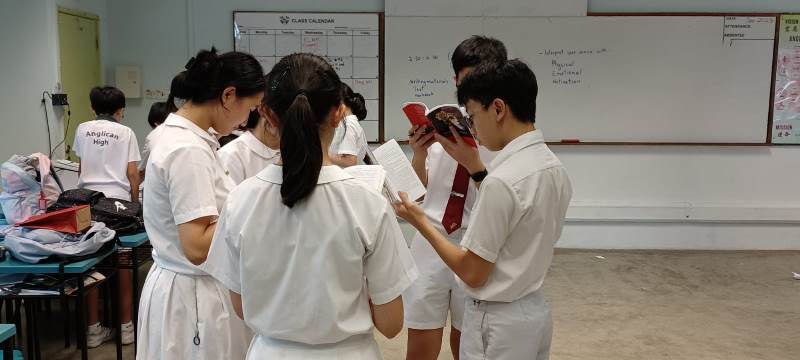
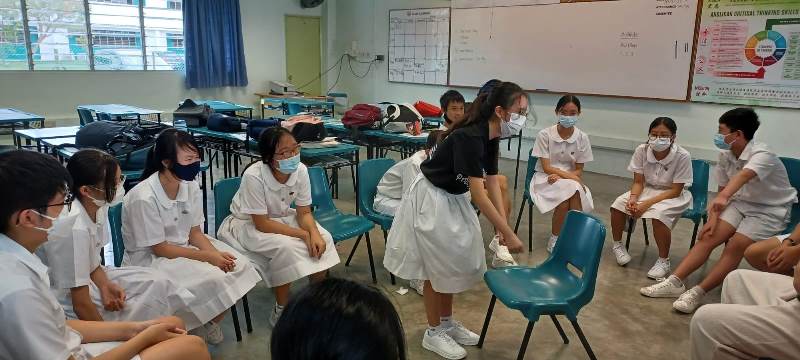
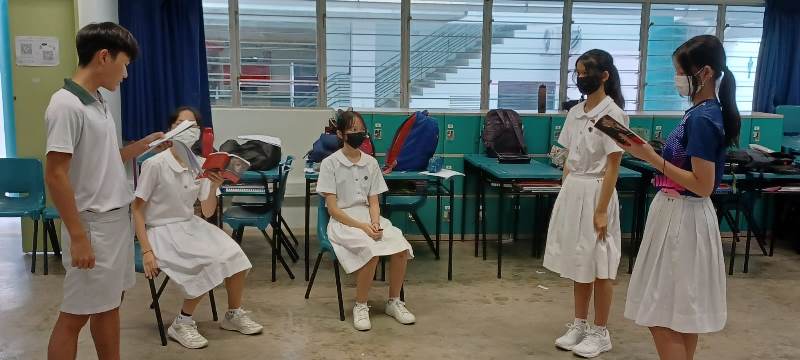
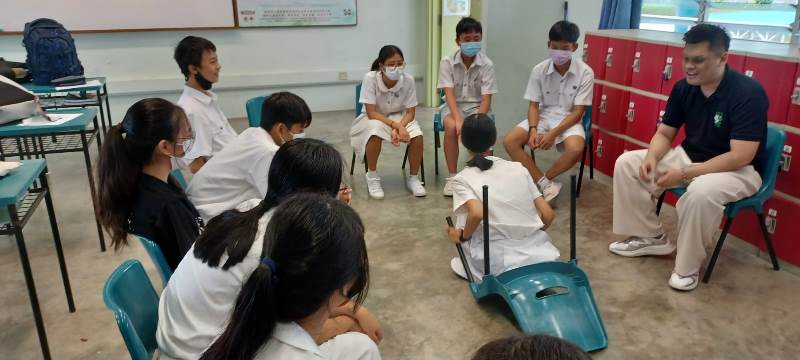
Drama-based Learning for Literature | Sec 2 | Experiential learning experience that deepens literary understanding through firsthand performance. |
Students doing dramatic readings and improvisation as part of the drama workshops.
Enrichment
Presenting & Facilitating Opportunities
In alignment with the Learner Outcomes and the 21st Century Competencies, students are given multiple opportunities to communicate confidently, effectively and sensitively to a variety of audiences. In the course of the year, students are invited to participate in the following school publicity events as guides and mentors:
● Anglican High School Open House
● School Publicity Talks
● Primary School Publicity Talks
● Primary School Booths
English Language & Literature (ELL) Talents Programme
The ELL Talents Programme aims to nurture students’ talents in English Language and expand their horizons. Students will work on skills in writing and oracy and have a choice to pursue either Creative Writing or Journalism.
Students’ writing will be featured in school publications such as Falcon, which showcases literary and reflective pieces written by students, stakeholders and staff to uplift and encourage.
As part of the programme, students will have the opportunity to attend workshops, embark on learning journeys, and participate in writing competitions to further hone their writing and oracy skills. This includes the National Organ Transplant Unit Essay (NOTU) Competition, the Plain English Speaking Competition, and the Asia Pacific Essay Competition.
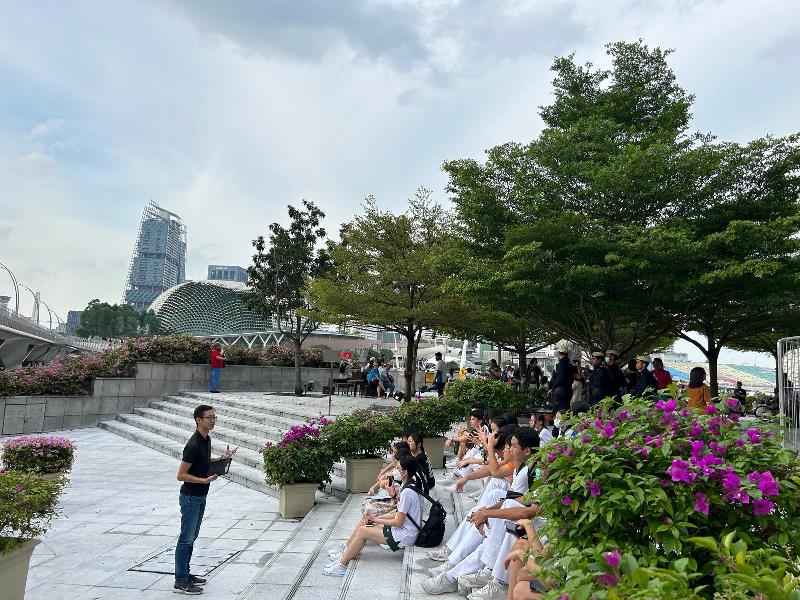
Students at a creative writing workshop and learning journey to Singapore River, facilitated by local poet Theophilus Kwek.
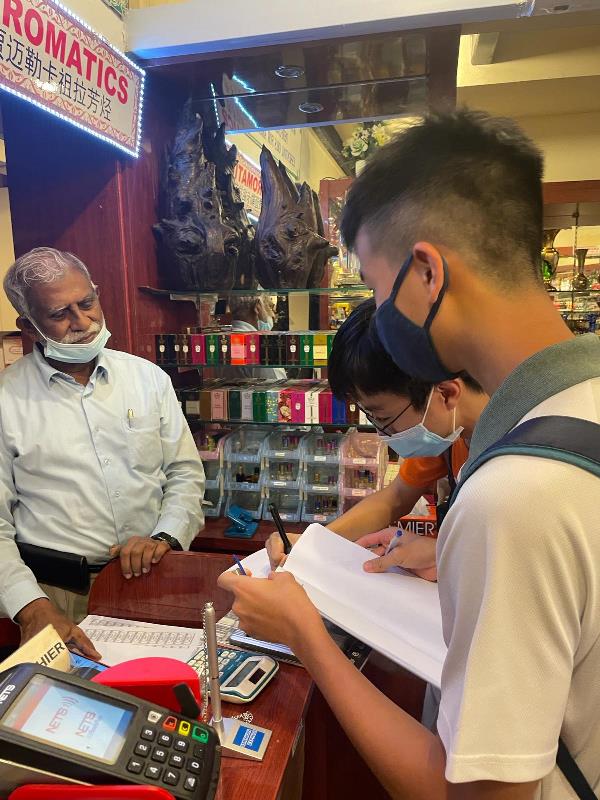
Student journalists interviewing shopkeepers during a learning journey to Kampong Glam.
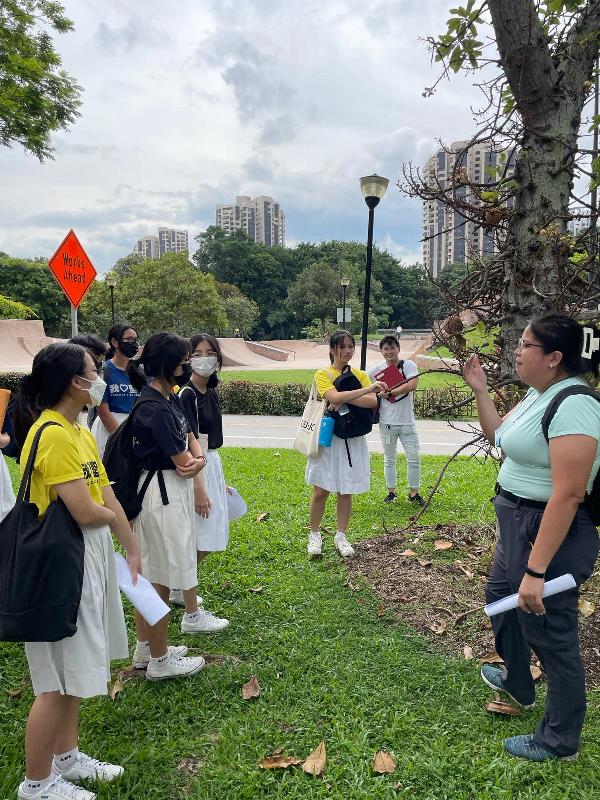
Students at an eco-poetry workshop, where they analysed poems on nature, and used the surroundings as inspiration for their own creative works.
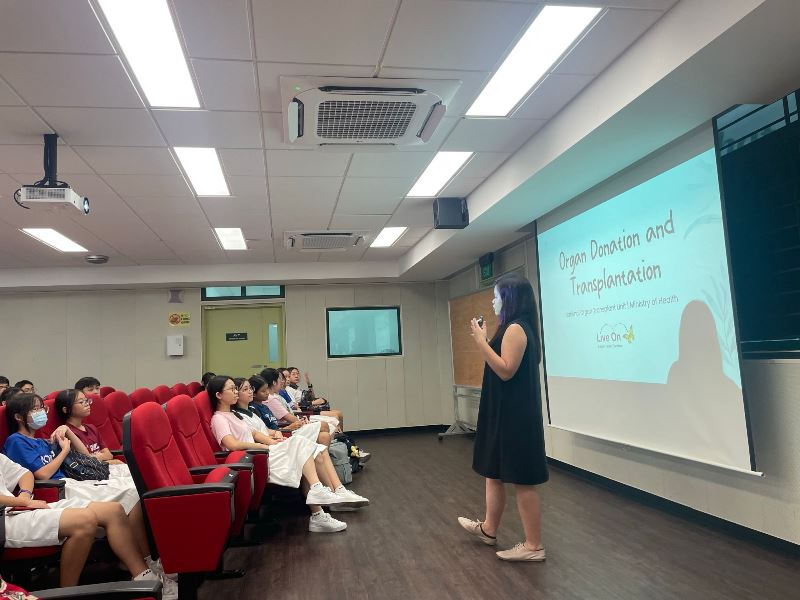
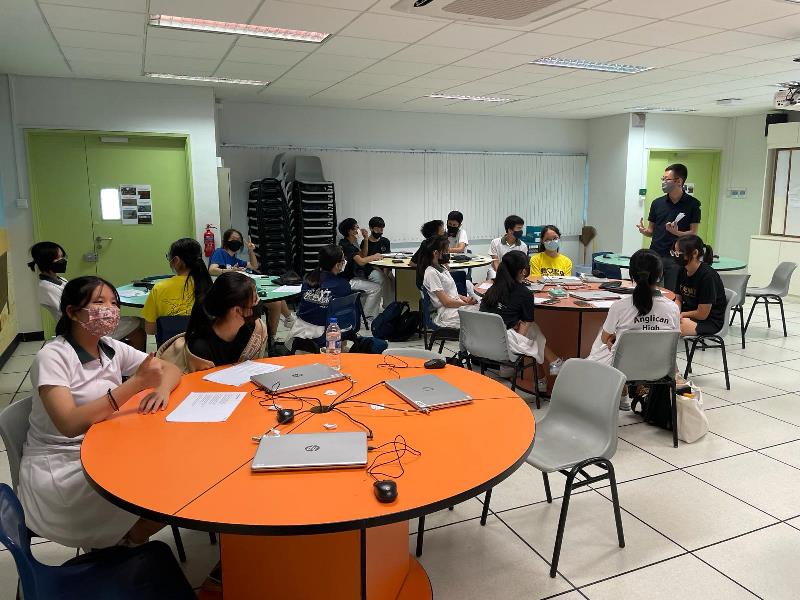
Students being briefed on the National Organ Transplant Unit Essay (NOTU) Competition
“Participating in the Live On Festival writing competition was truly a revelation for me. I was able to be exposed to the topic of organ donation, a rarely covered yet prominent issue, and got comments and suggestions on how to improve my writing through vetting with the teachers. It was an amazing experience that allowed me to see, grow and learn.” - Caleb Kuah 3A
“The learning journey was an invaluable learning opportunity and chance to take learning out of the classroom. I was able to gain insight into the forethought and process of writers as they pen poetry, the message that they want to convey, and the various forms of techniques that leave readers inspired. There is something memorable about connecting a piece of writing to its source; it instills appreciation for language, and the learning journey was an unparalleled experience to take my literary journey a step further!” - Lam Kai Qi, 4A